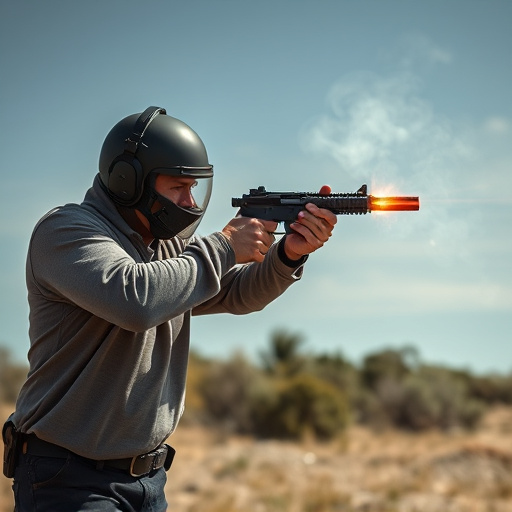
Neuromuscular Effects of Stun Devices: A Comprehensive Overview
Introduction
The concept of neuromuscular effects within the context of stun devices represents a fascinating interplay between technology, biology, and law enforcement strategy. Stun devices, also known as electronic control weapons (ECWs), utilize electric currents to disrupt muscle control in their targets, rendering them temporarily incapacitated. This article delves into the intricate details surrounding these devices, exploring their neuromuscular impact, global reach, economic implications, technological innovations, regulatory frameworks, and the challenges they present. By examining these aspects, we gain a holistic understanding of stun devices' role, both as a tool for law enforcement and a subject of intense debate.
Understanding Neuromuscular Effects of Stun Devices
Definition and Core Components
Neuromuscular effects refer to the physiological impact on the nervous system, specifically the disruption of electrical signals between nerves and muscles. Stun devices achieve this by delivering high-voltage, low-current electric pulses through electrodes in contact with the target's skin. This electrical interference prevents nerve impulses from reaching the muscles, leading to muscle contraction and subsequent incapacitation.
Key components include:
- Electrodes: Typically made of conductive materials like metal, they make physical contact with the target's body.
- Control Unit: The brain of the device, responsible for generating and regulating the electrical pulses.
- Power Source: Batteries or rechargeable modules power the stun device, ensuring sustained operation during critical situations.
- Trigger Mechanism: This can range from simple hand-operated switches to more advanced mechanisms employing sensors and motion detection.
Historical Context and Significance
Stun devices have evolved significantly since their early inception in the 1960s. Initially designed as non-lethal alternatives to firearms, they have become integral to police forces worldwide. The neuromuscular focus emphasizes the device's ability to subdue individuals without causing permanent harm, marking a significant departure from traditional lethal force options.
Global Landscape and Trends
The global market for stun devices exhibits notable trends:
- Increasing Adoption: Many countries are integrating ECW technology into their law enforcement arsenal, particularly in regions focusing on community safety and non-lethal force options.
- Regional Disparities: Adoption rates vary across regions, with North America and parts of Europe leading in usage, while Asia-Pacific and Latin America witness growing interest.
- Customized Solutions: Manufacturers are tailoring devices to meet specific law enforcement needs, resulting in specialized models for different tactical scenarios.
Global Impact and Trends
Regional Variations
- North America: Widely adopted by police forces due to its focus on community policing and non-lethal force strategies. Brands like Taser (now Axon) have become synonymous with stun devices globally.
- Europe: Many European countries have embraced ECWs, particularly for crowd control during public events and demonstrations. The European Union's standards ensure interoperability among different device models.
- Asia-Pacific: Growing awareness of non-lethal force options is driving adoption, especially in countries investing heavily in law enforcement infrastructure.
- Latin America: Increasing demand due to rising crime rates and a push for more tactical approach to policing.
Impact on Law Enforcement Strategies
Stun devices have revolutionized police tactics by providing officers with a versatile tool for:
- Crowd Control: Effective during protests, riots, or large public gatherings where rapid deployment of force is necessary without causing widespread injury.
- Individual Subduing: Ideal for apprehending resistant individuals who pose a potential threat to officers or the public.
- Non-lethal Response: Offers a balanced approach in high-risk situations, reducing the likelihood of fatal outcomes.
Economic Considerations
Market Dynamics
The global stun device market is characterized by:
- Growth: Steady increase driven by rising crime rates, growing law enforcement budgets, and increasing emphasis on non-lethal force options.
- Competition: Numerous players compete, leading to technological advancements and price competition.
- Segmentation: The market segments devices based on power output, weight, and tactical applications, catering to diverse user needs.
Investment Patterns
- Government Procurement: Law enforcement agencies at federal, state, and local levels are primary drivers of demand, investing heavily in stun device technology for their forces.
- Private Sector Adoption: Security firms and private citizens also contribute to market growth as they seek personal protection and security solutions.
Economic Impact
The economic implications include:
- Job Creation: Manufacturing, distribution, and after-sales service sectors experience employment opportunities due to the growing market.
- Government Savings: Non-lethal force options may lead to reduced injuries among police officers, lowering long-term healthcare costs associated with line-of-duty injuries.
- Product Diversification: Manufacturers' ability to expand product lines catering to diverse user needs stimulates further economic growth.
Technological Innovations
Advancements in Stun Device Design
- Redesigned Electrodes: Improved electrode designs ensure better skin contact, increasing the effectiveness of neuromuscular disruption while minimizing user discomfort.
- Smart Sensors: Integration of sensors allows for more precise control, detecting factors like target movement and body mass to adjust pulse intensity.
- Rechargeable Batteries: Transition from disposable batteries to rechargeable models offers cost savings and environmental benefits.
Emerging Technologies
- Microelectromechanical Systems (MEMS): Miniaturization through MEMS technology enables the creation of more compact and lightweight stun devices with enhanced performance.
- Wireless Communication: Future devices may incorporate wireless communication capabilities, enabling real-time data sharing between officers and command centers during operations.
- Artificial Intelligence (AI): AI algorithms could enhance target acquisition and identification, improving overall device effectiveness.
Regulatory Frameworks
Legal Considerations
Stun devices operate within a complex legal landscape:
- Legality: Their use is regulated by individual countries' laws, with some permitting their employment only in specific circumstances or for specific agencies.
- Permits and Licenses: In many jurisdictions, law enforcement officers require specialized training and licensing to carry and deploy stun devices.
- Public Safety Standards: Manufacturers must adhere to stringent safety standards to ensure device reliability and minimize risks of misuse.
International Regulations
- United Nations (UN) Guidelines: The UN offers non-binding guidelines for the use of force, emphasizing proportionate and necessary response by law enforcement.
- International Organizations: Regional bodies like the European Union set interoperability standards, ensuring devices across different countries function compatibly.
Challenges and Controversies
Health and Safety Concerns
- Muscular Deformation: While stun devices are designed to be non-lethal, some studies suggest potential for muscular deformation or rhabdomyolysis, a condition causing muscle breakdown and kidney damage.
- Neurological Effects: Long-term effects on the nervous system remain a subject of ongoing research, sparking debates about device safety over extended periods.
Misuse and Abuse Allegations
- Excessive Force: Critics argue that stun devices can be misused by officers, leading to potentially harmful applications during routine encounters or against vulnerable individuals.
- Civil Liberties Concerns: Advocates for civil liberties express fears of increased police power and potential abuse, particularly in communities of color and other marginalized groups.
Training and Accountability
- Inconsistent Training: Inadequate training on stun device use can lead to errors and misuse, underscoring the need for standardized, comprehensive training programs.
- Accountability Measures: Developing clear protocols for using stun devices and holding officers accountable for their actions is essential to maintaining public trust.
Conclusion
Stun devices, with their neuromuscular impact, represent a significant advancement in law enforcement tactics, offering non-lethal force options for dealing with resistant individuals. However, they also present challenges related to safety, misuse, and civil liberties. As technology evolves, continuous research, robust regulation, and comprehensive training will be crucial to ensure these devices serve their intended purpose effectively while minimizing potential harm. The global stun device market, characterized by innovation and diverse regional adoptions, reflects the ongoing evolution of this critical law enforcement tool.
November 15, 2025
Neuromuscular Effects of Stun Devices
Accidental discharges of firearms and stun devices pose significant risks with far-reaching conseque.......
Read more →
November 13, 2025
Neuromuscular Effects of Stun Devices
Despite advancements, stun guns' reliability hinges on understanding their neuromuscular effect.......
Read more →
November 11, 2025
Neuromuscular Effects of Stun Devices
Stun weapons' effectiveness, governed by physical properties and neuromuscular effects, varies.......
Read more →
November 10, 2025
Neuromuscular Effects of Stun Devices
The neuromuscular effects of stun devices, increasingly used as non-lethal weapons, are profound. Hi.......
Read more →
November 7, 2025
Neuromuscular Effects of Stun Devices
The neuromuscular effects of stun devices, particularly Tasers, cause temporary paralysis through hi.......
Read more →
November 5, 2025
Neuromuscular Effects of Stun Devices
The neuromuscular effects of stun devices, including temporary blindness, electromagnetic pulses, an.......
Read more →
November 3, 2025
Neuromuscular Effects of Stun Devices
Rechargeable stun gun batteries, primarily lithium-ion (Li-ion), offer convenience and sustainabilit.......
Read more →
November 1, 2025
Neuromuscular Effects of Stun Devices
The legal status of concealed carry stun guns varies globally, reflecting a delicate balance between.......
Read more →
October 31, 2025
Neuromuscular Effects of Stun Devices
Stun devices operate by disrupting electrical signals in muscles through high-voltage, low-amperage.......
Read more →
October 28, 2025
Neuromuscular Effects of Stun Devices
The neuromuscular effects of stun devices, which utilize electrical current to immobilize targets, h.......
Read more →
October 26, 2025
Neuromuscular Effects of Stun Devices
In the realm of personal defense, Tasers and stun guns stand out as popular choices. However, unders.......
Read more →
October 24, 2025
Neuromuscular Effects of Stun Devices
The neuromuscular effects of stun devices are key to non-lethal self-defense, temporarily paralyzing.......
Read more →
October 23, 2025
Neuromuscular Effects of Stun Devices
Stun devices, like tasers and traditional stun guns, disrupt neuromuscular function to temporarily i.......
Read more →
October 21, 2025
Neuromuscular Effects of Stun Devices
Stun devices operate by delivering high-voltage, low-current electric pulses that disrupt neuromuscu.......
Read more →
October 19, 2025
Neuromuscular Effects of Stun Devices
Stun devices like Tasers and traditional guns disrupt neuromuscular function through targeted electr.......
Read more →
October 17, 2025
Neuromuscular Effects of Stun Devices
Neuromuscular effects significantly impact stun device performance and battery life expectancy, infl.......
Read more →
October 14, 2025
Neuromuscular Effects of Stun Devices
Stun devices' neuromuscular effects stem from high-voltage, low-current electric shocks disrupt.......
Read more →
October 12, 2025
Neuromuscular Effects of Stun Devices
Selecting a tactical stun gun holster requires understanding the neuromuscular effects of these devi.......
Read more →
October 10, 2025
Neuromuscular Effects of Stun Devices
The neuromuscular effects of stun devices, which disrupt electrical impulses and cause muscle spasms.......
Read more →
October 8, 2025
Neuromuscular Effects of Stun Devices
Stun devices use high-voltage, low-current electrical pulses to temporarily paralyze targets by trig.......
Read more →
October 6, 2025
Neuromuscular Effects of Stun Devices
The neuromuscular disruption caused by stun devices, achieved through neuromodulation and ion channe.......
Read more →
October 4, 2025
Neuromuscular Effects of Stun Devices
Stun device battery life expectancy depends on energy output, voltage, discharge time, and environme.......
Read more →
October 2, 2025
Neuromuscular Effects of Stun Devices
Neuromuscular Effects of Stun Devices are key to their function as personal defense tools, temporari.......
Read more →
September 30, 2025
Neuromuscular Effects of Stun Devices
Stun devices disrupt brain control over muscles by emitting high-voltage, low-current electrical pul.......
Read more →
September 28, 2025
Neuromuscular Effects of Stun Devices
The Neuromuscular Effects of Stun Devices temporarily disable attackers through electric shocks, cau.......
Read more →
September 26, 2025
Neuromuscular Effects of Stun Devices
Stun gun design prioritizes neuromuscular effects, focusing on ergonomic grips and user comfort to e.......
Read more →
September 24, 2025
Neuromuscular Effects of Stun Devices
The effectiveness of stun guns derives from their disruption of neuromuscular functions, temporarily.......
Read more →
September 22, 2025
Neuromuscular Effects of Stun Devices
The Neuromuscular Effects of Stun Devices are crucial for their self-defense functionality. These de.......
Read more →
September 20, 2025
Neuromuscular Effects of Stun Devices
The Neuromuscular Effects of Stun Devices depend on reliable power sources with varying battery life.......
Read more →
September 18, 2025
Neuromuscular Effects of Stun Devices
The neuromuscular effects of stun devices disrupt electrical signals controlling muscle contractions.......
Read more →
September 16, 2025
Neuromuscular Effects of Stun Devices
Stun guns' effectiveness relies on neuromuscular disruption caused by high-voltage, low-current.......
Read more →
September 14, 2025
Neuromuscular Effects of Stun Devices
Stun devices utilize high-voltage, low-amperage electric currents to disrupt nerve impulses and caus.......
Read more →
September 12, 2025
Neuromuscular Effects of Stun Devices
Rechargeable batteries in stun devices offer a sustainable and cost-effective alternative to single-.......
Read more →
September 10, 2025
Neuromuscular Effects of Stun Devices
Civilian ownership of stun devices like Tasers is heavily regulated due to their Neuromuscular Effec.......
Read more →
September 8, 2025
Neuromuscular Effects of Stun Devices
Understanding electric current interaction with fabrics is vital for designing and deploying stun de.......
Read more →
September 6, 2025
Neuromuscular Effects of Stun Devices
The Neuromuscular Effects of Stun Devices, like tasers, cause temporary to potentially permanent par.......
Read more →
September 4, 2025
Neuromuscular Effects of Stun Devices
The neuromuscular effects of stun devices, like tasers, stem from their ability to disrupt nerve imp.......
Read more →
September 2, 2025
Neuromuscular Effects of Stun Devices
Choosing the right holster for stun devices requires understanding their neuromuscular effects, whic.......
Read more →
August 31, 2025
Neuromuscular Effects of Stun Devices
Stun devices disrupt neuromuscular signals, causing temporary muscle paralysis through electric curr.......
Read more →